
Russell Shanks on how SOE-related games suggest skills needed to be a successful SOE operative
According to Adam Chapman, videogames offer players the opportunity to embody and play as historical figures as a form of historical practice.[1] In the case of games such as the Sniper Elite series (Rebellion, 2005-25) or RAID: World War II (Starbreeze Studios, 2017), such figures include members of the Special Operations Executive (SOE). These forms of historical practice will never truly simulate the conditions and experiences of real agents, but, unlike other media (such as literature or film), players are able to test their skills and wiles by taking control of SOE-inspired characters and by playing through representations of SOE activity.
So, what do videogames suggest are the necessary skills to be an SOE operative?
Combat Proficiency
Most SOE-related videogames are digital wargames. Combat is an essential aspect of these games, and it is down to the player character to overcome game challenges through successful use of virtual combat skills. Mastery of weapons, tactical nous, and stealth are particularly important when engaging in covert action while outnumbered by adversaries.
Videogames often position their heroes as expert soldiers, specially selected for dangerous missions behind enemy lines. SOE operatives were trained to handle and master a variety of different weapons from Allied and Axis arsenals. This meant they would be prepared to make use of whatever weapons they could beg, borrow, or steal. Manuals such as W.E. Fairbairn’s All-In Fighting (1942) instructed SOE trainees on the dark arts of hand-to-hand and close combat to overcome adversaries.
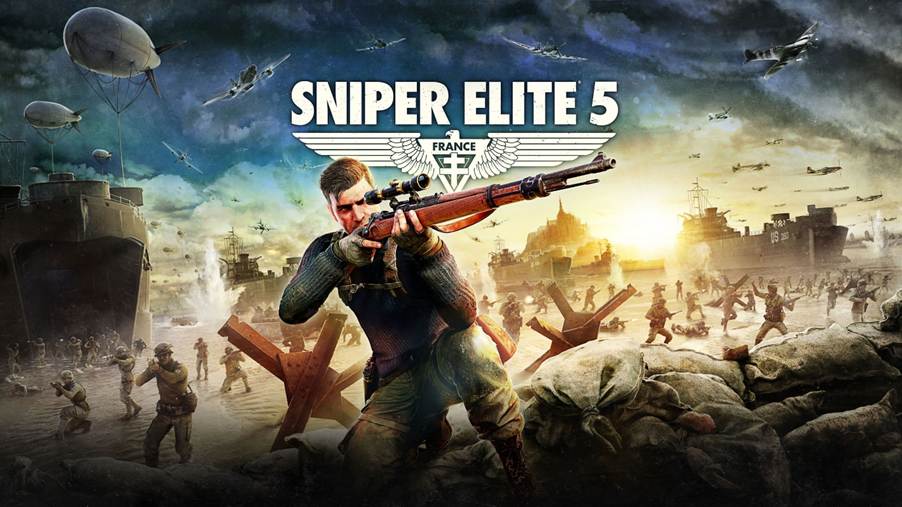
In the Sniper Elite series, the main protagonist Karl Fairburne’s proficiency in combat makes him an ideal operative to undertake and achieve multiple objectives for SOE in each game level. His inner voice narrates tips, suggestions and other prompts to guide the player through each stage of his missions – from stealthily bypassing heavily guarded checkpoints, to celebrating feats of sniping prowess – all helped by his familiarity with the series’ arsenal of weapons and tools.
Resourcefulness
The ability to adapt to situations as they unfold is critical to covert action. The Partisan Leader’s Handbook (1939), a pre-SOE guide to clandestine warfare compiled by Colin Gubbins (who would become head of the agency), identifies resourcefulness as an essential attribute:
A leader must have courage and resource, he must be intelligent and a good administrator and be a man of quick decision.[2]
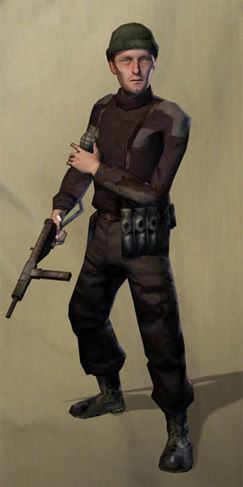
Major Philip Bromley from Medal of Honor: Rising Sun (EA, 2003) exemplifies the resourceful, swashbuckling SOE hero. He often appears in the game levels at pivotal moments to support the player-character, Office of Strategic Services (OSS) agent ‘Joe’ Griffin. This ranges from dropping through a glass roof, Sten sub-machine guns akimbo, to blow away a meeting of top Nazis in the mission ‘Singapore Sling’, to commandeering a Sikorski Firefly helicopter to escape a firefight at a Burmese Temple in ‘Search for Yamashita’s Gold’.
In less dramatic moments, he appears to brief and update Griffin as the levels unfold and occasionally fights alongside him to eliminate enemies. Narratively, Bromley’s connections (through SOE) across the Pacific theatre facilitate each mission by ensuring Griffin (and the player) have the right tools for the job. When other tools are needed, Bromley can be relied upon to steal them.
Teamwork
Featuring deployments alongside other special operations personnel or liaisons with the local Resistance, digital wargames rarely present SOE characters working alone.
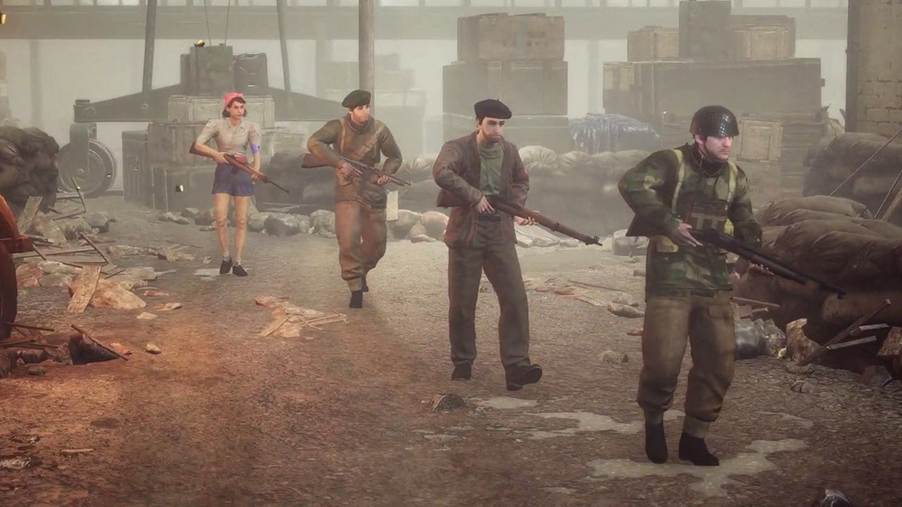
The Real-Time Strategy game Classified: France ’44 (Team17, 2024) emphasises the need for teamwork as players are required to choose from a selection of playable characters to build their team for each mission. Characters are divided between different classifications (Marksman, Heavy, Leader, Support, Scout), with a balance between the different roles required to complete objectives and best enemies. Inter-personal relationships are an important dynamic to the game, with narrative mechanics, such as ‘Bonding Moments’ between characters, crucial to restore characters ‘Morale’ stats and enable them to keep fighting.
Interpersonal relationships were important to SOE personnel. Being able to trust colleagues and work well in a network were important to successful operations. In some cases, the stresses and pressures of clandestine work could bring SOE operatives close together, and a number of agents even engaged in romantic relationships, such as Francis Cammaerts and Krystyna Skarbek, Odette Samson and Peter Churchill, or Guy d’Artois and Sonya Butt.
Humour
Humour is an essential tool for the virtual operative to cope with the tension of clandestine work. Across most SOE-related digital wargames, moments of frivolity and comedy are deployed to punctuate the darkness of warfare. Such moments appear to be rooted in the unofficial culture of the SOE. Wartime operatives Violette Szabo and Nancy Wake were noted for their wicked sense of humour, engaging in practical jokes together during training.[3]
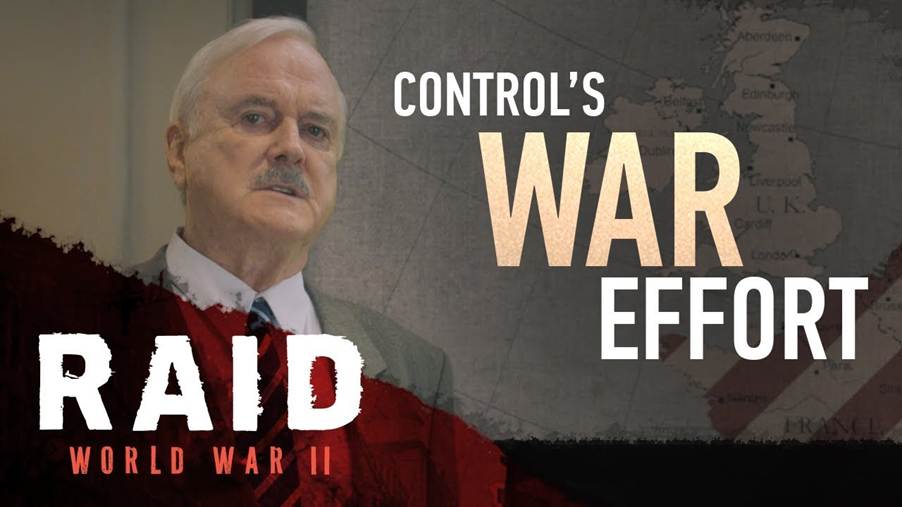
Among the most humorous SOE game characters is ‘Control’ from RAID: World War II. Played by British comedy icon John Cleese, Control is eccentric head of ‘The Ministry of Ungentlemanly Warfare’ (a nickname given to SOE) and appears in cutscenes throughout the game to provide mission briefings, updates, and congratulate the playable characters on a job well done. Cleese leans into the miscreant upper-class character as Control and his script features referential moments to his former work, including the archetypal repressed Englishman, hotel proprietor Basil Fawlty:
Ah! It’s you. Got a particularly nasty Nazi that needs a damn good thrashing. [4]
This references a scene in the Fawlty Towers episode ‘Gourmet Night’ in which Cleese’s hapless hotel proprietor Basil Fawlty threatens his van with ‘a damned good thrashing’ as he desperately attempts to deliver a replacement dish to distinguished guests at the hotel.[5]
Resilience
To complete highly dangerous covert mission required resilience and resourcefulness, illustrated by the story of SOE operative Pearl Witherington. After the fall of the STATIONER circuit in central France, where she had served as a Courier, Witherington stepped up to reestablish networks of Resistance groups and became leader of the WRESTLER circuit, the only female operative to lead French Maquis in the war.[7]
In games too, when things go wrong, SOE operatives must display resilience to continue their missions. In the Battlefield V (EA, 2018) level ‘Nordlys’, Solvieg Fia Bjornstad sets out to rescue her mother Astrid, a member of the Norwegian Resistance who has been imprisoned at the Norsk Hydro Plant. After accomplishing this Solvieg is convinced by Astrid to assume her mission to warn the world about the distillation of heavy water at the plant and Nazi plans to use it to create an atomic bomb. In the act ‘All is Ash’, Astrid prevents Solvieg (and a crucial intelligence dossier) being captured by pushing her off a bridge into a frozen ravine. Injured, and battling against the effects of hypothermia, Solvieg (the player) must make her way to the rendezvous point and safety. In a vignette towards the end of the act, Solveig falls again, off a frozen waterfall and into the water below. Dragging herself back onto land, she collapses onto the ground. Only the voice of her mother telling her to ‘wake up!’ can spur her to run to the safety of a cabin. In the third act ‘Wolf and Dog’, Solvieg, now recovered and determined to finish her mother’s mission, sets off to destroy the remaining stocks of heavy water.
All of these games help audiences to imagine what skills were required to become an effective agent. Although such stylised adaptations of SOE history can never capture the realities of clandestine warfare, by championing these attributes they provide a fun way to engage with some of the experiences of real wartime heroes.
[1] Adam Chapman, Digital Games as History: How Videogames Represent the Past and Offer Access to Historical Practice (Routledge, 2016) pp. 267-268
[2] Major Colin Gubbins, ‘The Partisan Leader’s Handbook. 1939’, in The Secret Agent’s Pocket Manual 1939-1945 (Osprey Publishing, 2014) p.28
[3] Robyn Walker, The Women Who Spied for Britain: Female Secret Agents of the Second World War (Stroud, 2015) p.24; Russell Braddon, Nancy Wake: World War Two’s Most Rebellious Spy, (e-book edition, New York, 2019) p. 127
[4]A compilation of many of Control’s scenes, including the one referenced can be found here: ‘Raid World War II – Control (John Cleese) Scenes Compilation’, Hoxtilicious, Youtube (2017) <https://www.youtube.com/watch?v=CypvSyLrEnc&list=PLrLjJR_ppZFgrf_-l5VYNVtmRnW9jaDyC&index=60> [Accessed 09/09/2026]
[5] ‘Gourmet Night’, Fawlty Towers (BBC, 1975 & 1979), series 1, episode 5, 1975.
[6] ‘Control’s War Effort’, LionGameLion YouTube (31/08/2017) <https://youtu.be/TpeB9opFMqI?si=AP5abQUfWlYTeQ8d> [Accessed 09/09/2026]
[7] Carol Seymour-Jones, She Landed by Moonlight: The Story of Secret Agent Pearl Witherington, (London, 2014) p.297