
Guy Woodward on imperial echoes in accounts by SOE agents of their experiences in the Balkans
Prior to parachuting into occupied Yugoslavia in May 1943, the Special Operations Executive (SOE) agent Jasper Rootham recalled imagining that his experiences there would resemble the imperial adventures he had read about as a boy:
I had imagined to myself, I do not quite know why, tiny bodies of men crouching in caves and from time to time rolling rocks down precipitous slopes on to enemy columns winding slowly through the valley below. I think that this idea must have been inspired by a picture in a history-book of my childhood, which showed the Afghans playing a similar trick on a column of British troops in red[1]
Rootham, who arrived in southern Serbia as a liaison officer with royalist resistance forces, was quite wrong: just after the war he wrote that ‘I cannot help smiling now when I recollect how utterly ignorant we were of the sort of conditions that would face us when we came floating down.’ Much of his memoir Miss Fire (1946) indeed describes the collapse of romantic ambitions and convictions, as the SOE personnel see little in the way of action and relations with their Serb hosts, unhappy at the slow and irregular delivery of Allied arms and supplies, begin to sour.
Rootham was withdrawn from Yugoslavia the following year, following the Allied decision to switch support decisively from the royalist Chetniks to Tito’s communist Partisans, a decision which helped to enable Tito’s rise to power at the end of the war and which Rootham viewed as a terrible betrayal. Britain’s wartime role in Yugoslavia was bitterly contested in the immediate aftermath of the war, often in the pages of memoirs by military personnel who, like Rootham, had parachuted into Yugoslavia.
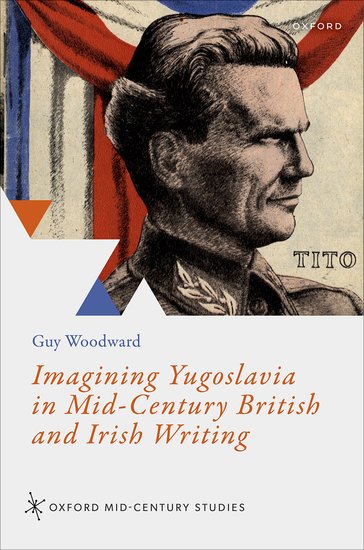
As my new book Imagining Yugoslavia in Mid-Century British and Irish Writing – published today by OUP – shows, Rootham’s romantic and imperial delusions were hardly uncommon at this time and among the cohort of young men who were recruited for these kind of roles. Many accounts focus on the picturesque and seemingly anachronistic aspects of life in occupied Yugoslavia; writers often refer to fictional adventure stories by writers such as John Buchan as means of framing their wartime experiences.
Probably unsurprisingly, the most common point of reference is T.E. Lawrence, who had worked with Arab groups to foster armed revolt against the Ottoman Empire in the Middle East during the First World War. Lawrence described these experiences at length in Seven Pillars of Wisdom; they were also widely publicised and mythologised by others through press coverage and celebratory lectures and exhibitions. He is a spectral and recurrent presence in accounts of missions to the Balkans during the Second World War, not only by Rootham but also by Julian Amery, Peter Kemp, Fitzroy Maclean, and others. Lawrence’s influence highlights the dynamic at work in British special operations whereby myths fostered by popular culture and propaganda conditioned the professional identities of individual agents, informed selected military operations, and then in turn framed subsequent first-person accounts of these.
These texts help to highlight a crucial imperial context for SOE, a wartime organisation whose operations were informed by pre-war British counter-insurgency campaigns in the North-West Frontier Province of British India, in Palestine, or during the War of Independence in Ireland. They also contradict the historiographical fallacy of ‘splendid isolation’, by which Britain’s imperial history and involvement in European affairs are often separated.
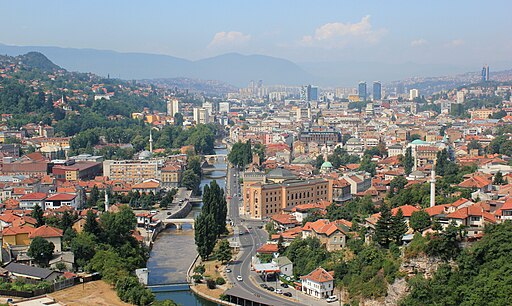
Imagining Yugoslavia interrogates a peculiar fascination with Yugoslavia in British and Irish literature and culture during the 1940s and 50s. The book has been long in the making: I first began thinking about this topic after a brief period living in Sarajevo in Bosnia and Herzegovina in 2014. Having begun by exploring novels, radio plays, films and travel writing, as my research continued the significance of accounts of wartime special operations became obvious. Since there was no mass deployment of British service personnel to the Balkans, memoirs by Rootham and others were particularly significant for the role they played in mediating the Yugoslav experience of the war for readerships in Britain. The lens of British liaison operations helped to shape perceptions of the Balkans in Britain in the immediate post-war period, a time when these perceptions were subject to considerable change.
Perceptions and projections of other places reveal much about culture and politics at home, of course. By tracing the various roles played by this now-extinct Balkan state in the cultural imaginations of the declining imperial metropole and its former colony, this new cultural history illuminates forgotten lines of transmission between north-west and south-east Europe: forged, during the war, by agents of the British secret state.
Imagining Yugoslavia in Mid-Century British and Irish Writing is available now from Oxford University Press here.
Chapter 4 of the book, ‘Lawrence of Yugoslavia: Imperial Adventures in Wartime Europe’, explores writings by Fitzroy Maclean and Jasper Rootham, among others.
Note
[1] Jasper Rootham, Miss Fire: The Chronicle of a British Mission to Mihailovich (London: Chatto & Windus, 1946), 9.