
Ash-Percival Borley on the pioneering wartime intelligence officer and the hidden role of secretaries in the secret war
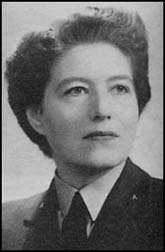
A woman in a tailored burgundy skirt-suit stepped off a bus on Baker Street, London. It was 1941. Piles of rubble and damaged buildings offered painful reminders of the bombs dropped by the Luftwaffe the year before. The woman was tall, her features striking. She wore a determined expression that belied a fiercely intelligent mind and a strong sense of duty to her adopted country. She took a long drag from her cigarette before dropping it onto the pavement and crushing it with the toe of her moderately heeled shoe. Adjusting the folder under her arm, she walked confidently into a very ordinary-looking building: 64 Baker Street, the headquarters of the Special Operations Executive.
Inside, she moved along drab corridors as she headed towards the conference room. It was almost ten o’clock, and the daily section briefing was about to begin when Colonel Maurice Buckmaster looked up and smiled.
“Ah Vera, you’re here. Shall we begin?”

Vera Atkins was a Romanian-born British intelligence officer who served SOE from 1941 to 1946. She joined the French Section as Buckmaster’s secretary, but her intelligence, intuition, and natural leadership abilities soon made her indispensable. She became the section’s Intelligence Officer — effectively its operational conscience — responsible for agent selection, assessment, and, later, post-war investigations into the fate of those who did not return. Atkins is a woman I have long admired. The more I learned about her wartime and post-war life, the more compelling her story became. Sarah Helm’s A Life in Secrets (2005) was instrumental in shaping my understanding of Atkins, and it is a book I strongly recommend.
Vera Atkins’s story also gestures toward a wider, often-overlooked truth about intelligence work in wartime. She entered SOE through a role traditionally described as administrative, yet her proximity to information and decision-making placed her at the centre of the organisation. This was true not only of Atkins, but of many women who worked as civilian secretaries across intelligence services. These women were routinely dismissed as peripheral, yet they were entrusted with extraordinary knowledge. They typed reports, handled correspondence, and sat in offices where secrets accumulated.
In organisations defined by compartmentalisation and silence, secretaries became quiet custodians of intelligence, holding information, recognising patterns, and carrying responsibility without recognition. By recognising women such as Vera Atkins, we challenge the assumption that secretarial work was passive or marginal. Instead, we see how power in intelligence often flowed through those closest to the secrets themselves, women whose authority was informal, unseen, and essential to the functioning of Britain’s secret war.